
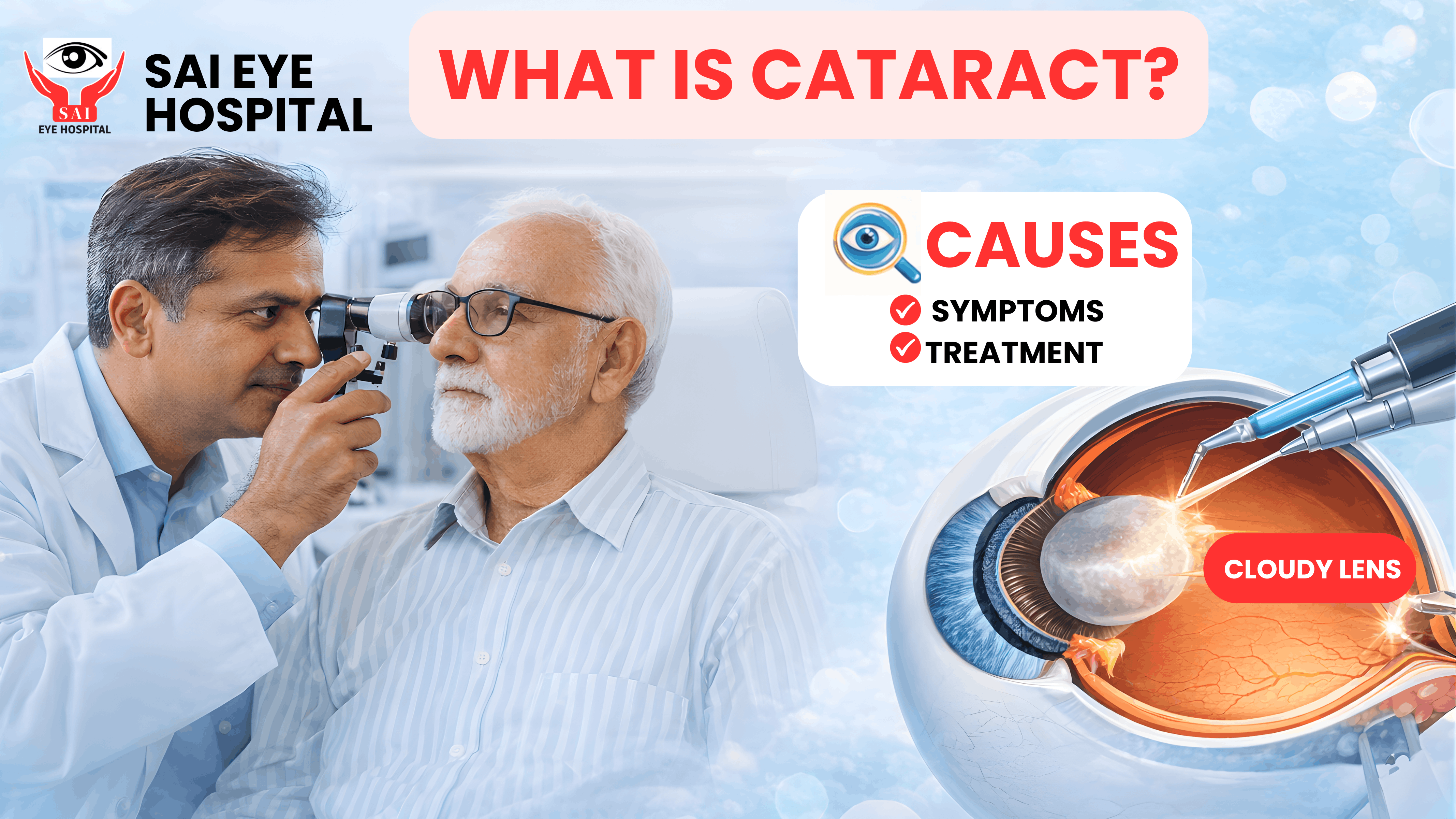
Cataract is one of the most common eye conditions affecting people worldwide, especially among older adults. It occurs when the natural lens of the eye, which is normally clear, becomes cloudy over time. This cloudiness prevents light from passing clearly through the lens, resulting in blurred or distorted vision. Cataract can affect one or both eyes, but it does not spread from one eye to the other.
The eye works much like a camera. Light enters through the cornea, passes through the pupil, and is focused by the lens onto the retina at the back of the eye. The retina then sends signals to the brain, allowing us to see clearly. When a cataract forms, the lens becomes cloudy, and the image reaching the retina becomes blurred. As the cataract progresses, vision gradually worsens and can significantly affect daily life if left untreated.
Causes of Cataract
The most common cause of cataract is aging. As we grow older, the proteins in the eye’s lens begin to break down and clump together, leading to cloudiness. Age-related cataracts usually develop slowly and may not cause noticeable vision problems in the early stages.
Apart from aging, several other factors can increase the risk of developing cataracts. Diabetes is a major risk factor, as high blood sugar levels can cause changes in the lens, leading to cataract formation at an earlier age. Eye injuries or trauma can damage the lens and result in cataracts, sometimes years after the injury. Prolonged use of corticosteroid medications is also known to increase the risk of cataracts.
Exposure to excessive ultraviolet (UV) radiation from sunlight can contribute to cataract development, especially in people who spend long hours outdoors without eye protection. Smoking and excessive alcohol consumption are additional lifestyle factors that may accelerate cataract formation. In some cases, cataracts are present at birth or develop during childhood due to genetic factors or infections during pregnancy; these are known as congenital cataracts.
Types of Cataract
There are different types of cataracts, classified based on their location and cause. Nuclear cataract affects the center of the lens and is most commonly associated with aging. It often causes gradual blurring of distance vision and may initially improve near vision temporarily, a condition sometimes referred to as “second sight.”
Cortical cataract develops in the outer edges of the lens and gradually extends toward the center. It often causes glare and difficulty with night vision. Posterior subcapsular cataract forms at the back of the lens and can progress more rapidly than other types. This type often affects reading vision and causes sensitivity to bright light and glare.
Congenital cataract is present at birth or develops in early childhood. It may affect one or both eyes and requires early diagnosis and treatment to prevent permanent vision loss.
Symptoms of Cataract
Cataract symptoms usually develop slowly and may not be noticeable at first. One of the earliest signs is blurred or cloudy vision, as if looking through a foggy or frosted window. Colors may appear faded or yellowish, and contrast sensitivity may be reduced.
Many people with cataracts experience difficulty seeing at night, especially while driving. Headlights and streetlights may appear too bright or have halos around them. Sensitivity to light and glare is another common symptom, making it uncomfortable to be in bright sunlight or well-lit environments.
Frequent changes in eyeglass or contact lens prescriptions can also be a sign of cataract. Double vision in one eye may occur in some cases. As cataracts progress, daily activities such as reading, watching television, driving, and recognizing faces can become increasingly difficult.
Diagnosis of Cataract
Cataracts are diagnosed through a comprehensive eye examination conducted by an eye specialist. The examination usually includes a visual acuity test to measure how well you see at various distances. A slit-lamp examination allows the doctor to examine the structures at the front of the eye under magnification.
Pupil dilation is often performed to examine the lens and retina more thoroughly. This helps the doctor determine the presence, type, and severity of the cataract. In some cases, additional tests may be conducted to evaluate overall eye health and rule out other eye conditions.
Regular eye checkups are essential, especially for older adults and people with risk factors such as diabetes. Early detection of cataracts allows for timely management and better treatment outcomes.
Treatment Options for Cataract
In the early stages, cataract symptoms may be managed with non-surgical methods. Updating eyeglass prescriptions, using brighter lighting for reading, reducing glare, and wearing sunglasses with UV protection can help improve vision temporarily. However, these measures do not stop the progression of cataracts.
The only definitive treatment for cataract is surgery. Cataract surgery is one of the most commonly performed and safest surgical procedures worldwide. It is usually recommended when cataracts begin to interfere with daily activities and quality of life.
Modern cataract surgery involves removing the cloudy natural lens and replacing it with a clear artificial intraocular lens (IOL). The procedure is typically performed on an outpatient basis and usually takes less than 30 minutes. Local anesthesia is used, and patients remain awake but comfortable during the surgery.
Modern Cataract Surgery Techniques
With advancements in medical technology, cataract surgery has become highly precise and effective. Phacoemulsification is the most commonly used technique, in which ultrasonic waves are used to break the cloudy lens into small fragments that are then removed through a tiny incision.
In some cases, laser-assisted cataract surgery may be used. This technique utilizes advanced laser technology to perform certain steps of the surgery with high accuracy. Both methods aim to ensure faster recovery, minimal discomfort, and excellent visual outcomes.
There are different types of intraocular lenses available, including monofocal, multifocal, and toric lenses. The choice of lens depends on the patient’s lifestyle, visual needs, and the presence of other eye conditions. Your eye doctor will help determine the most suitable option for you.
Recovery After Cataract Surgery
Recovery after cataract surgery is usually quick and smooth. Most patients notice an improvement in vision within a few days, although complete healing may take a few weeks. Mild discomfort, itching, or sensitivity to light is normal during the initial recovery period.
Patients are advised to use prescribed eye drops to prevent infection and reduce inflammation. It is important to avoid rubbing the eyes, lifting heavy objects, or engaging in strenuous activities for a short period after surgery. Wearing protective eyewear may be recommended to prevent accidental injury.
Follow-up visits with the eye doctor are essential to monitor healing and ensure optimal results. With proper care, cataract surgery can restore clear vision and significantly improve quality of life.
Prevention and Eye Care Tips
While cataracts cannot always be prevented, certain lifestyle choices can help reduce the risk or slow their progression. Wearing sunglasses that block UV rays, maintaining good control of diabetes, quitting smoking, and limiting alcohol consumption are important preventive measures.
A healthy diet rich in fruits, vegetables, and antioxidants may support overall eye health. Regular eye examinations are crucial for early detection and timely treatment of cataracts and other eye conditions.
Conclusion
Cataract is a common and treatable eye condition that can significantly impact vision and daily life if left untreated. Understanding its causes, symptoms, and treatment options empowers individuals to seek timely medical care. With modern surgical techniques and advanced intraocular lenses, cataract treatment is safe, effective, and capable of restoring clear vision.
If you or your loved ones experience symptoms of cataract, consult an experienced eye specialist for proper evaluation and personalized treatment. Early diagnosis and appropriate care can help protect your eyesight and ensure long-term eye health.